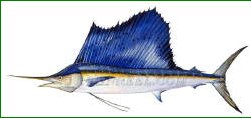
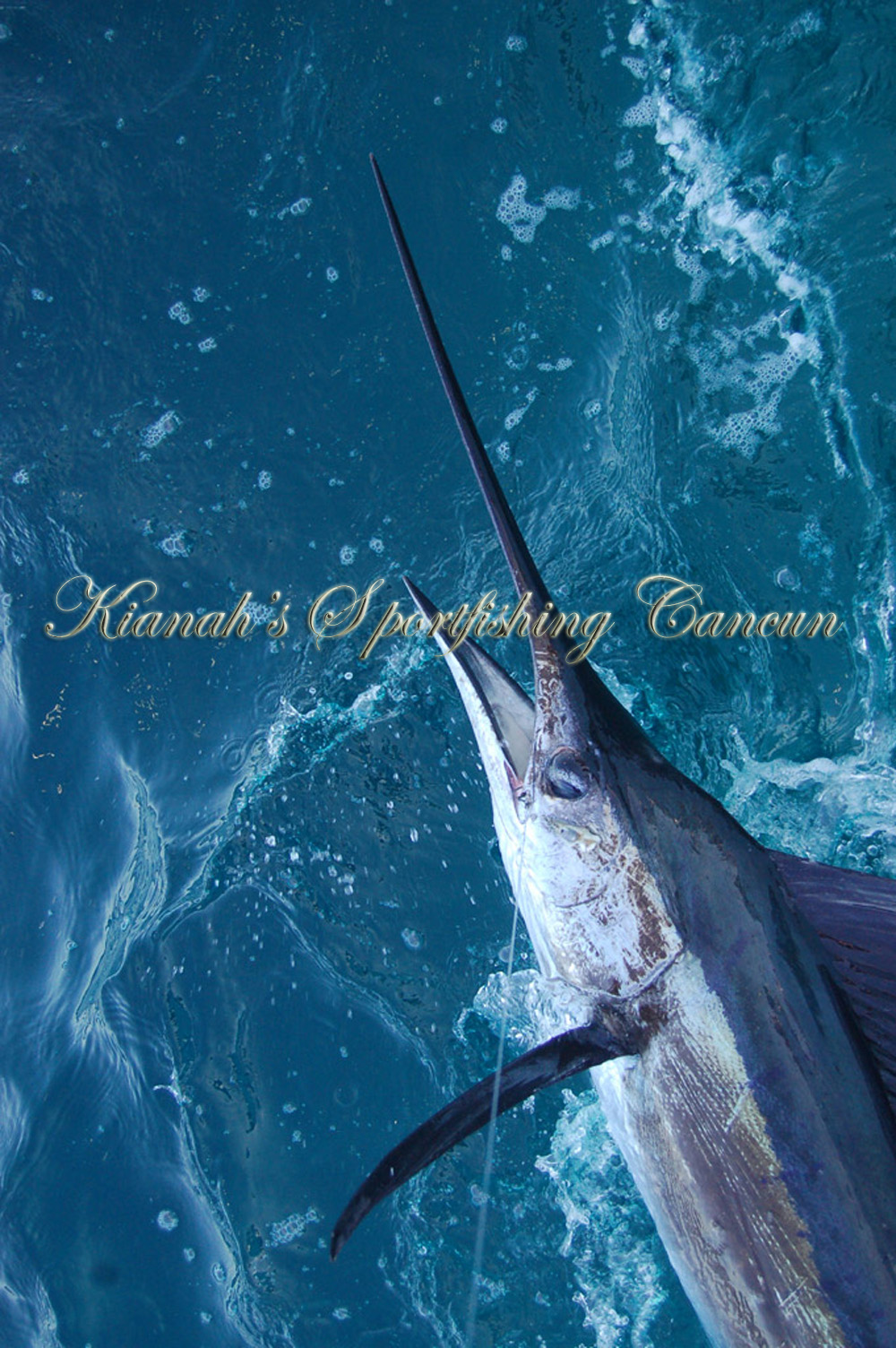
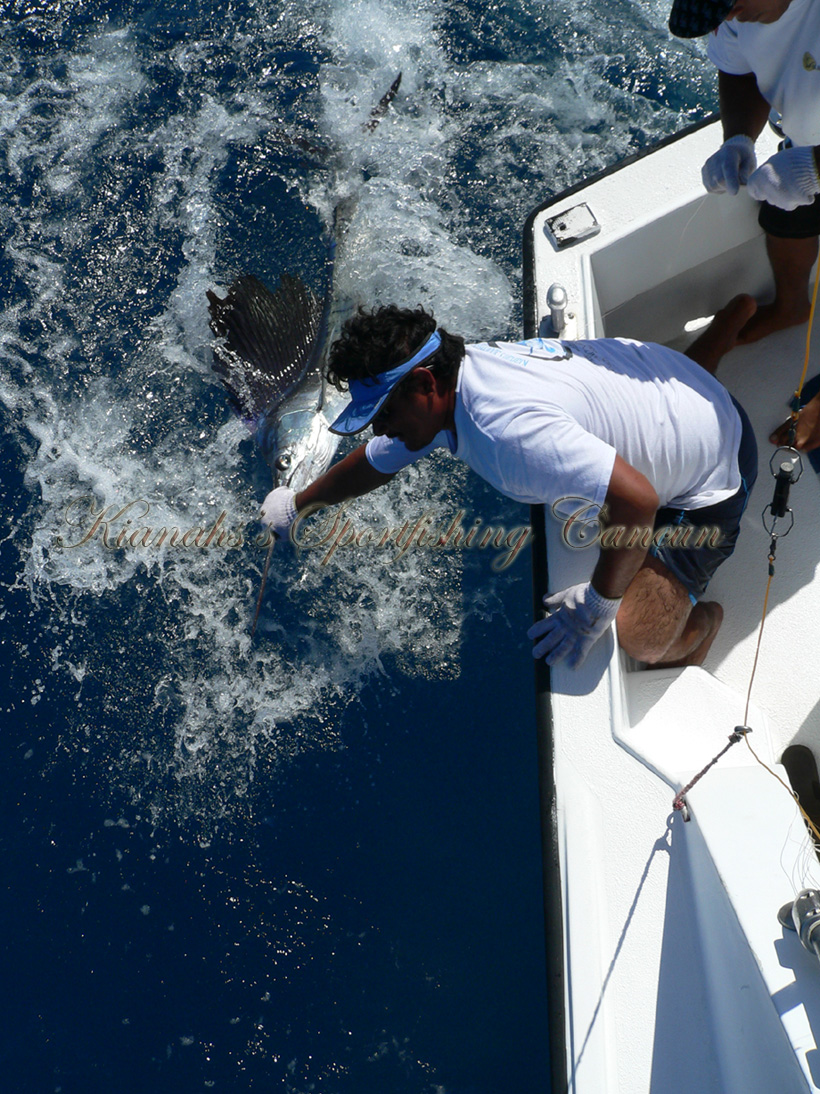
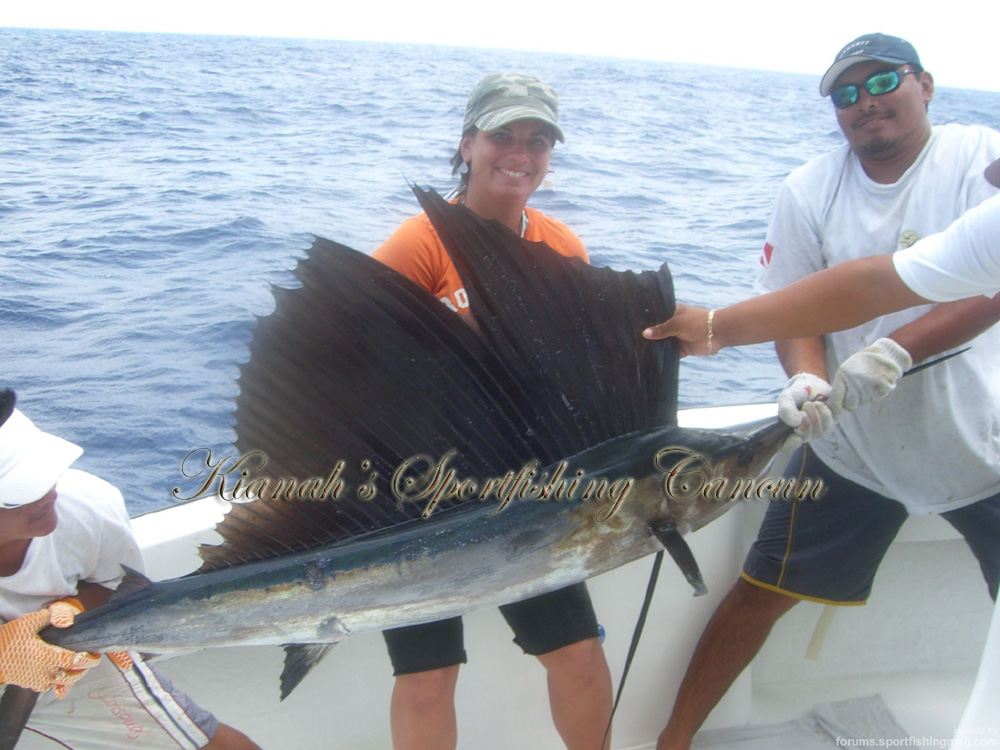
Isla Mujeres and nearby Cancun have been called "a
sailfishing paradise," a place where 20-fish days are
the norm, not the exception. Fed by major offshore currents
and by its proximity to mangrove wetlands that serve as
nursery grounds for all manner of baitfish, Mexico's Banco
Arrowsmith teems with frigate birds, sea gulls and terns
wheeling and diving over indigo rips frothed by schools of
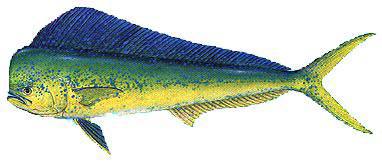
little tunny, squid, dolphin and sailfish.
In nearby fishing villages, the atmosphere is just as
idyllic. The people are warm and accommodating, the
facilities outstanding. Yet this past winter, things got
ugly in paradise, as innuendo, jealousy and
misunderstandings erupted over one of the greatest runs of
Atlantic sailfish in recent memory. The animosity had
nothing to do with locals and everything to do with a fleet
of approximately 40 visiting U.S. sport-fishing boats. At
the heart of the controversy were gear conflicts, runaway
egos and fishermen unwilling to extend the simplest
considerations to one another.
The sad news is that the situation was not unique, but
simply an exaggeration of conflicts increasingly experienced
by fishermen from St. Thomas to California where more and
more anglers are competing for a shrinking number of game
fish.
Marlin has no interest in becoming the judge and jury on
matters of ethics in fishing. Our role is that of devil's
advocate, to raise some questions and hopefully provide
enough input that people may start to think more about ideas
such as sportsmanship, respect and courtesy as fisheries
become even more competitive.
Some Background
On December 17, 1996, a Cancun captain by the name of
Orlando Duran took a charter party fishing out of Isla
Mujeres expecting to catch kingfish. He ran 20 miles north
to Isla Contoy - an area known for its good kingfishing -
and caught a dozen or so king mackerel. He also received a
surprise bonus of 17 sailfish. At the urging of Capt. Jim
Schwarz, manager of Cancun's Marina Hacienda del Mar, Duran
returned a week later with another guest and caught and
released 34 sailfish.
What Duran and Isla Mujeres-based captains such as
Anthony Mendillo would soon discover is that there is a much
bigger, early bite of sailfish off Isla Mujeres that no one
ever knew about until Duran stumbled onto them balling pods
of baits well north of Arrowsmith Bank.
Word started to get around and in 1999 two skippers from
Oregon Inlet, North Carolina - Capt. Chip Shafer on the
Temptress and Arch Bracher on the Pelican - arrived the
first week of March to try the early bite. According to
Schwarz, Bracher caught 59 his first day out and Shafer
caught and released 39. The bite just kept up after that,
said Schwarz. News quickly spread to Oregon Inlet and
Stuart, Florida, where both men had ties, and also to the
Internet. So in the year 2000, some 15 boats arrived in
early February. Schwarz told captains of the eight boats at
his dock in Cancun not to leave without 100 baits. The seven
at Isla Mujeres heard the same kind of advice from Mendillo.
The "shenanigans," as Schwarz terms them, began
the end of February and first week of March as the bite was
reaching its peak, and "egos and greed began to
supercede sportsmanship and fun," according to Schwarz.
With sailfish feeding on bait pods, they were easy to
catch. "One day Capt. Anthony Mendillo on the Keen M
goes out with a single angler in his 28-foot Sea Craft and
catches and releases 70 sailfish trolling, establishing a
so-called record for the most Atlantic sails by a single
angler," said Schwarz. "Several days later, Capt.
Eddie Herbert and his three mates and six anglers go out
early on the 65-foot Reel Tight with spinning rods to see
how many they can catch. They used radar to look for flocks
of birds over bait pods and when they found them, they cast
into the bait with their spinning rods, which infuriated
local fishermen because we have a policy of catching
sailfish here only by trolling," explains Schwarz.
Herbert caught 86 sailfish that day.
Meanwhile, Mike Brauser on his 65-foot Buddy Davis Besty
VIII arrived from Fort Lauderdale. Enthusiastic after a poor
first season the year before, Brauser and his crew decided
to go out early and caught 70 sailfish on the first day.
"I couldn't believe it," said Brauser. "The
fishing was incredible." They then went to 12-pound
conventional tackle and to tagging as many fish as possible,
he adds. "Most days we caught between 30 and 60
fish."
An independent sort, Brauser was getting up early and
leaving the dock by 5:45 a.m., running way north of the
usual fishing grounds to find flocks of birds with fish
under them, said Schwarz.
"Now we've got two boats out of Isla Mujeres leaving
early and one out of Cancun doing the same thing. All three
of them were catching 20 fish before the rest of the fleet -
including the charter boats at my dock - got out at 9
a.m.," says Schwarz.
Every day boats were pushing the envelope, going earlier,
staying later. Capt. Patrick Brogan on the Marlin Darlin
caught 72, Capt. Rick Ogle on the Rapscallon caught 50. In
five days, Capt. Mike Brady on the Vintage racked up 500
releases. Another South Florida boat out of Isla Mujeres
caught 70, reputedly on spinning rods by backing into the
schools - a practice that is a definite no-no by local
standards. (Dock agreements signed by those staying at
Marina Hacienda del Mar restrict visiting sport-fishing
boats from using live bait, spinning tackle or backing into
bait schools to catch sailfish, an official policy that's
been in effect for more than a decade.)
"It wasn't long before we started hearing things on
the radio, like 'these are my birds, go find your own,'
" said Schwarz. "Pretty soon, captains were
videotaping one another to prove who was pitch-baiting and
who wasn't." It was a fiasco, observes Capt. Brenden
Burke, who was there on the Lori G, a 61-foot Garlington.
Concerned about the number of fish being killed at the
rushed hands of crews fishing for numbers in bait pods, the
Secretary of Fishing for the state of Quintana Roo was ready
to wade in on the issue by mid-March.
"Even under the best circumstances, I think [the
government] estimates that 15 percent of the fish die from
the stress of being caught and released," says Schwarz.
"So with 1,000 sailfish a day being caught by what was
now a 40- to 50-boat fleet, the secretary had become
concerned about the health of this fishery, which is a
tremendous economic resource to the area." After
investigating, the secretary issued the following statement:
"If this type of fishing continues, I will pull
everyone's license."
Things started to settle down, but not for long. A few
days later a mate on an American charter boat docked at
Schwarz's marina threatened the owner of a private boat over
his leaving early and not sharing information over the
radio, saying he was "ruining it for everyone." At
Isla Mujeres a similar confrontation took place over a boat
that had six spinning rods in the outrigger legs. That
particular captain - who refused to heed the warning of
Mexican fishing officials, saying, "No one is going to
tell me how to fish" - eventually was asked to leave
and reportedly was discharged from his job when he got home.
Root Issues
"I've fished all over the world. I've charter fished
and I've run private boats, but I've never encountered
anything like what went on last year in Mexico," says
Burke. "I was embarrassed to be an American and
saddened to see how little respect these captains paid one
another. Some of the worst offenders were the so-called
senior captains who should know better."
"Things got to the point I had to stand back and say
to myself, what's going on here?" says Capt. V.J. Bell
on the Bone Shaker, who in recent years has distinguished
himself as a straight shooter and tournament winner in
Cancun. "In the U.S. we're bred to win, to catch all
the fish we can. But eventually you begin to wonder, how
many fish do we need to catch to feel like we've had a good
day?"
What was really behind the squabbling in Mexico?
In Cancun most of the dissension was between charter
boats and visiting private boats, in other words between
people who have to fish to make a living and those who are
on someone else's payroll.
"There's a big difference between people who charter
for a living, running their own boats, and those who fish
private boats," says Capt. Ron Hamlin. "Charter
boats have to turn a profit. They can't afford the luxury of
running long distances every day in the hopes of catching
greater numbers of fish if they can produce a decent catch
for their parties closer in."
Also, they aren't on "vacation," meaning they
put in long days, day in and day out, said Bell. "The
private boats in Mexico might run every other week or so
when the boss and guests are in town. It's not a big deal if
they have to get up early for a week or two because you know
you'll have a chance to rest the following week. When
chartering, you're fishing 200 or 300 days a year, putting
in 12 and 14 hours a day if you count your prep time. Once
your parties start hearing about all these other people
fishing from dawn to dusk, catching 70 fish, it puts more
pressure on charter boats to match those results."
While private-boat skippers should be courteous of the
charter skippers' different set of circumstances, does that
mean they should limit their own fishing time to match the
charter fleet's hours?
"In the absence of a law, no man should be told when
he can and can't go fishing by another fisherman," said
one captain we spoke with. Capt. Eddie Herbert came under
personal attack because owner Jim Lambert likes to start
fishing at 6 a.m. Says the sport-fishing captain who started
fishing Mexico in the mid-'70s: "I don't remember there
being a rule you couldn't fish before 9 a.m. and had to quit
at 6." If that was the case, he says, no one would ever
have discovered there were swordfish in Cozumel or that the
best marlin bite off St. Thomas is at first light."
Bell says these were some of the feelings behind the
"angry confrontation" between the charter-boat
mate and Brauser, the private fisherman and owner of the
Betsy VII. It turns out there were also hard feelings about
Brauser's captain, Doug Apfelberg, not calling fellow
captains at the dock when he found good numbers of fish to
the north.
Burke says he has been criticized for similar reasons.
"I've never been the kind of guy to get on the radio
and report every fish I catch," says the Massachusetts
native and longtime fishing captain. "My job is to
produce fish for my anglers. I'm not paid to be a scout and
see no reason for this particular clique of fishermen to
belittle and berate others just because the rest of us don't
go along with their program."
Oregon Inlet fisherman Capt. Arch Bracher has a different
viewpoint, believing a sharing attitude among fishermen is a
good thing.
"In North Carolina we have about 50 charter boats on
our dock and we all get along pretty well because we've
learned to work together for the common good," which,
in fact, is how he first met Apfelberg. "He was coming
into Oregon Inlet and was concerned about hitting bottom. I
answered his radio call and offered to come outside and show
him how to run the inlet. After that, we had dinner a couple
of times," he said.
Bracher, who did not have a confrontation with Apfelberg
or his boss, says he was disappointed Apfelberg did not show
the same courtesy to him, calling in to report he was seeing
good numbers of fish.
So do fishermen have an obligation to call others when
they find fish?
As recently as 15 years ago there were a lot fewer people
fishing, says Capt. Skip Smith. With so much ground to
cover, captains shared information to be successful, he
explains, but times have changed. "Nowadays boats are
equipped with side-scanning sonar, GPS, dual-frequency depth
sounders and radio direction finders, so if someone does
happen to call in a catch, you can zero in on their position
fast. We're even using radar to locate birds working over
bait, so you've got a lot more tools to find fish," he
explains. Smith says people who do continue to share
information with their friends are using cell phones instead
of the radio because, "once you put it on the air,
you're gonna attract a mob of boats."
In his own defense, Brauser says, "the boats off
Isla Mujeres tend to fish within a specific area in close
proximity to one another. If you do raise a pod of fish,
everyone can see what's happening and come right over,
plowing through the middle of the fish without any thought
to maintaining the integrity of the pod. To me, not only is
it rude, it's dangerous. I saw several close calls."
Brauser says that was one reason they started leaving the
dock early and running well to north. "I was tired of
the crowds. I admit, when we did find fish, we didn't
broadcast it because we didn't want the chaos we'd witnessed
to the south."
Working the Pods
The situation is not unique to Mexico. Islamorada fishing
captain Allan Starr, who developed the run-and-gun technique
of catching sailfish as they feed on ballyhoo along the
shallow reefs in the upper Keys, rarely calls anyone
anymore. "As soon as you do, here come eight or 10
smoke-belching boats roaring for you. Most times the fish
will go down and in that kind of situation there's no way
they'll come alive again."
People just don't know how to cooperate on a pod of fish
anymore, says Capt. Jack Morrow, who has practiced the art
of three and four boats working a pod of sailfish balling
bait for more than 40 years. "Most of them haven't had
the experience of knowing how to approach and fish
them," he explains. "Guys here were going crazy,
trolling right through the ball and stopping, and letting
their baits sink down, which is a lot more damaging than
someone casting and retrieving a bait with a spinning
rod."
Capt. Eddie Herbert says on his best day in Mexico, when
they caught and released 86, "there were clouds of
sailfish working bait pods. We fished the pods by trolling
and turning tight circles while the anglers cast baits to
the fish with spinning rods." Not once, said Herbert,
"did I back into a school, although I was accused of
it."
According to Eric Prince of the National Marine Fisheries
Service, no scientific study has ever been conducted on
survivability of sailfish caught on spinning tackle versus
those caught on conventional tackle, yet many believe
spinning tackle claims more fish.
Most of the captains we talked to said in the hands of a
fisherman who understands tackle and how to use it, one gear
is no worse than the other.
When it comes to gut-hooking fish, spinning and conventional
rods and reels are in the same boat, says Hamlin, who is
quick to suggest circle hooks as the only way to limit fish
mortality. "I just hope guys like Capt. Rick Ogle and
Pete Sanchez can convince Mexican officials to make it a law
that all boats targeting billfish use circle hooks," he
says.
Many of those catching sailfish in Mexico were using
circle hooks, which tend to hook more fish in the corner of
the jaw instead of in the eye, gut or other dangerous area,
providing a better chance of survival.
Captains such as Ogle fished almost exclusively with
circle hooks while Herbert on the Reel Tight used them about
40 percent of the time. Shafer and Bracher also experimented
with circle hooks, yet Bracher says he, for one, hopes they
never pass a law saying fishermen have to use them.
According to Schwarz, American sport-fishing boats will
be arriving as early as January 1 this year to see if the
fantastic bite will be repeated. Said one captain we spoke
with, "With the bite down south off Cozumel and Puerto
Aventuras slowing, I bet all those boats will be going to
Isla Mujeres as well, which of course, could make things
even more contentious."
The key to getting along in a hot fishery is not to be so
obsessive, to remember you are guests in a foreign country
and to act accordingly, says Schwarz. "The fishing here
is magnificent and will continue to be so if we all work
together to preserve it."